Killswitch Engineer


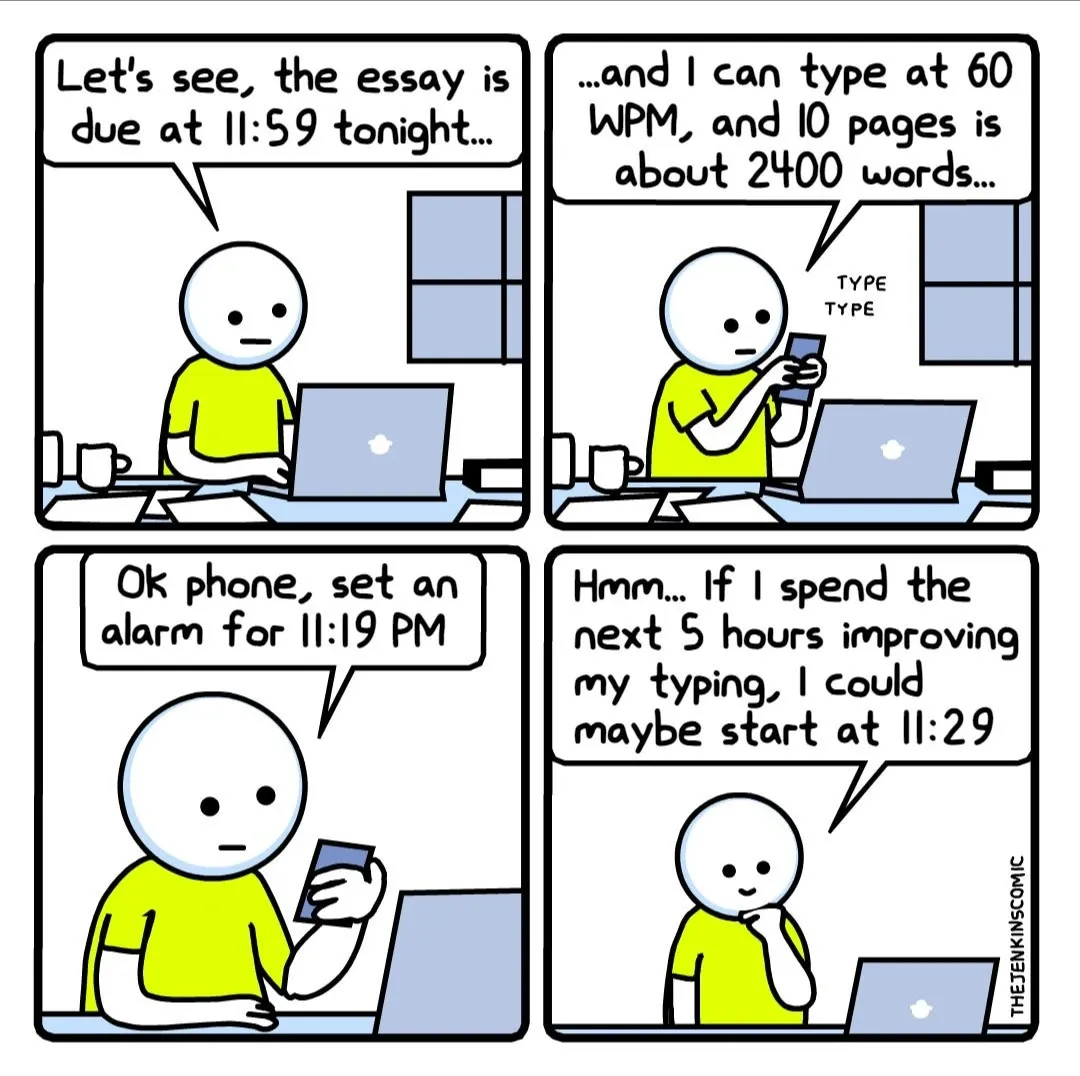
Something that’s painfully understudied is how experts are more efficient than novices while achieving better results. I say understudied and not unstudied, because it’s common knowledge that charging people for their time results in experts being paid less since they work faster, which is why experts charge more for their time.
This effect is understudied in the impact it has on novices entering a field. A Novice will start out being woefully inefficient, putting in incredible amounts of effort and running through all number of mental hoops in order to maintain the growing pile of unmaintainable abstractions they’ve developed. An expert doesn’t have to jump through these hoops. They can more clearly see the actual problem at hand and will more efficiently put their time and effort towards making progress against the problem. In contrast, novices will spend more time battling problems they created for themselves. Let’s explore this idea by looking at two characters entrapped in a maze, and how they go about escaping.
[ … ]

Accidentally made my Hyprland setup so minimal I deleted my wallpaper, my mouse, and my will to live.


The document you’ve linked, titled “Memetics: A Growth Industry in U.S. Military Operations” (DTIC Accession Number ADA507172), is a 2006 report by Michael Prosser. It explores how the U.S. military might apply the concept of memetics—the study of how ideas spread and evolve, akin to genes in biology—to influence behavior and shape perceptions in modern warfare.
Memetics is the study of “memes,” which are units of cultural information—like ideas, symbols, or practices—that spread from person to person. Think of how internet memes go viral; similarly, in this context, the military is interested in how ideas can be propagated to influence public opinion or enemy morale.
Countering Adversary Influence: Just as the military can spread its own messages, understanding memetics also aids in recognizing and countering propaganda or misinformation from adversaries.
Information as a Weapon: The report suggests that in today’s digital age, controlling information and influencing narratives can be as crucial as traditional military might.
Strategic Communication: By understanding how ideas spread, the military can craft messages that resonate with target audiences, potentially swaying opinions or behaviors without physical confrontation.
Psychological Operations (PSYOP): Memetics can enhance PSYOP by identifying which messages are more likely to be adopted and shared within specific cultures or groups.

The aliens are already here. They’re just reading my blog and having second thoughts about contacting.